|
|
Last Update: 29/9/2026
|
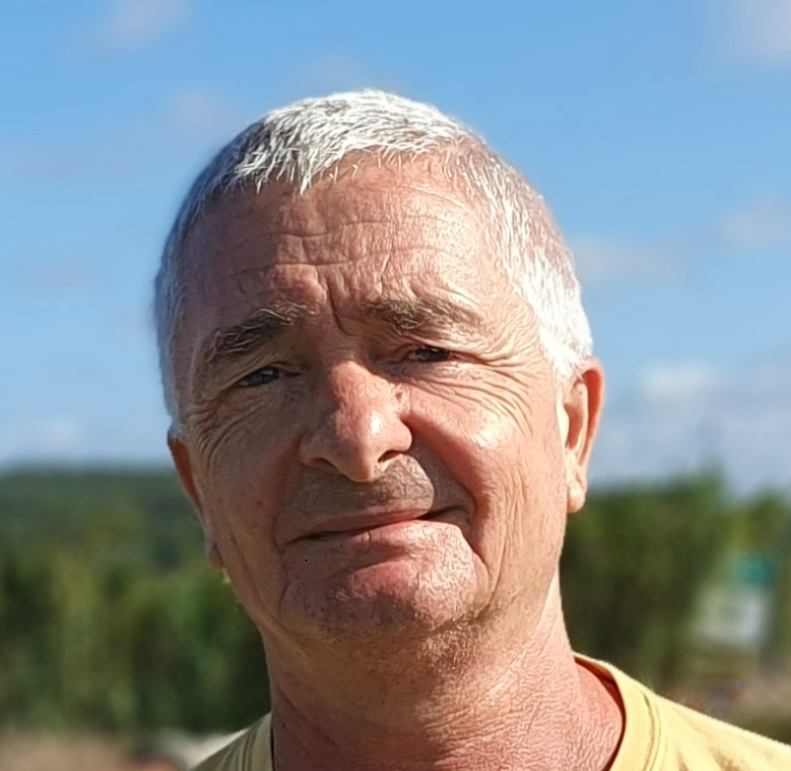
Luis Filipe Veiros
Associate Professor
(b. 1963)
|
|
|
Contacts
Departamento
de Engenharia Química
Instituto
Superior Técnico
Universidade de Lisboa
Av. Rovisco Pais
P - 1049-001 Lisboa
Portugal
Telefone: (+351) 21 841 92
83 (ext.: 3283)
Fax: (+351) 21 846 44 55

Education
Scientific
Interests
The
use of the computational methods of quantum
chemistry to
study organic chemistry and transition metal
organometallic chemistry.
Molecular orbital calculations are used to study
molecular structure and reactivity problems. The
geometric changes driven by electronic structure
modifications on the molecules may be rationalized
from the molecular orbital results. For example, in an
organometallic complex, some ligands may adapt their
coordination mode to the metal as a function of the
total electron count on the coordination sphere. This
can vary by means of a reduction or an oxidation of
the molecule, or by ligand addition or elimination, in
processes that take part in many relevant
organometallic reactions, such as catalytic reactions.
Computational chemistry studies have been used to
provide an important contribution to the fully
understanding of those problems.
Computational methods are also used to study
mechanistic and reactivity problems, allowing the
detailed analysis of very unstable species, such as
intermediates or transition states, and providing
information that cannot be obtained by experimental
studies. The results provide a detailed picture of the
reaction path and the corresponding energetic, and may
be used to tailor improved reaction methods.
Computational
Methods
The electronic
structure is studied by means of ab initio and DFT
molecular orbital calculations complemented with
populational and orbital analysis that can provide
usefull chemical interpretation to the quantitative
'crude' results of the calculations (geometries and
energies).
Teaching
Assignments (2025/2026)
Selected
Publications
"Mechanism for the Cyclotrimerization of
Alkynes and Related Reactions Catalyzed by
CpRuCl.";
Karl Kirchner, Maria José Calhorda,
Roland Schmid, Luís F. Veiros;
Journal
of the American Chemical Society 2003 125, 11721–11729.
"Zirconium bis(indenyl) sandwich complexes with an
unprecedented indenyl coordination mode and their
role in the reactivity of the parent bent
metallocenes. A detailed DFT mechanistic study.";
Luís F. Veiros;
Chemistry
- A European Journal 2005, 11, 2505–2518.
“Iron(II)
Bis(acetylide) Complexes as Key Intermediates in the
Catalytic Hydrofunctionalization of Terminal Alkynes”
Nikolaus Gorgas, Berthold Stöger, Luis F. Veiros,
Karl Kirchner;
ACS
Catalysis 2018, 8
(9), 7973–7982.
Recent
Publications
“Hydrogenation of Alkenes Catalyzed by Mn(I)
Alkyl Complexes Bearing NHC Phosphine Ligands”
Daniel P. Zobernig, Berthold Stöger, Luis
F. Veiros, Karl Kirchner;
ChemCatChem 2024,
16 (22), e202401172.
“Alkene Isomerization Catalyzed by a Mn(I)
Bisphosphine Borohydride Complex”
Ines Blaha, Stefan Weber, Robin Dülger, Luis
F. Veiros, Karl Kirchner;
ACS Catalysis
2024, 14 (17), 13174–13180.
“C-P Bond Cleavage Through Hydrogenation in
Ruthenium Complexes Supported by P,N Ligands”
Vanessa R.G. Cacho, Luís F. Veiros,
Clara S. B. Gomes, Mariana Sardo, Cláudia A.
Figueira, Ana M. Martins, Maria João
Ferreira;
Inorganic
Chemistry 2024, 63
(49), 23421–23430.
“Monoterpenoid Selenophenes Derived from
(-)-Carvone with GPx-like activity”
João P. Telo, Luis F. Veiros, Vânia
André, João Ferreira da Silva, Gonçalo C.
Justino, Alexandra M. M. Antunes;
Organic &
Biomolecular Chemistry 2025, 23
(9), 2153–2161.
“Borane-Tethered Heteroscorpionate Zinc
Catalysts for the Hydroboration of Carbon
Dioxide, Isocyanates, Esters and Nitriles”
Tiago F. C. Cruz, Luís F. Veiros;
Dalton
Transactions 2025, 54 (10),
4244–4254.
“Protecting Group-Free Photocatalyzed
O-Arylation of Quinic Acid”
Miguel A. Bárbara, Nuno R. Candeias, Luis
F. Veiros, Filipe Menezes, Andrea
Gualandi, Pier
G. Cozzi, Carlos A. M. Afonso;
Tetrahedron Green
Chem 2025, 5, 100070.
“Unexpected formation of neutral alkyl-Ni(II)
complexes bearing unsymmetrical C,N,N’-pincer
iminopyrrolyl ligands via intramolecular C-H
bond activation: a distinct type of
single-component ethylene polymerization
catalysts”
Cláudia A. Figueira, Patrícia S. Lopes,
Ricardo Meyrelles, Clara S. B. Gomes,
Joselaine C. S. Gomes, Luís F. Veiros,
Pedro T. Gomes;
Inorganic
Chemistry 2025, 64
(50), 24479–24496.
“Controllable Hydrosilylation and
Dehydrogenative Silylation of Alkenes
Catalyzed by a Manganese Alkyl Complex”
Daniel P. Zobernig, Luis F. Veiros,
Karl Kirchner;
Organometallics
2026, 45 (14), 1731–1739.
“Synthesis, Characterization and Reactivity of
Alkyl Iron (II) PCP Pincer Complexes”
Matthias Käfer, Simon Gstöttner, Berthold
Stöger, Antoine Dupé, Luis F. Veiros,
Karl Kirchner;
Organometallics
2026, 45 (17), 2177–2184.
“Hydroboration of Terminal Alkynes Catalyzed
by a Fe(II) Alkyl PCP Pincer Complex”
Matthias Käefer, Luis F. Veiros, Karl
Kirchner;
Organometallics 2026,
45 (18), 2195–2198.
|
|
|